
Rach Tram – The Green Note in Phu Quoc’s Symphony of Nature
10/09/2025
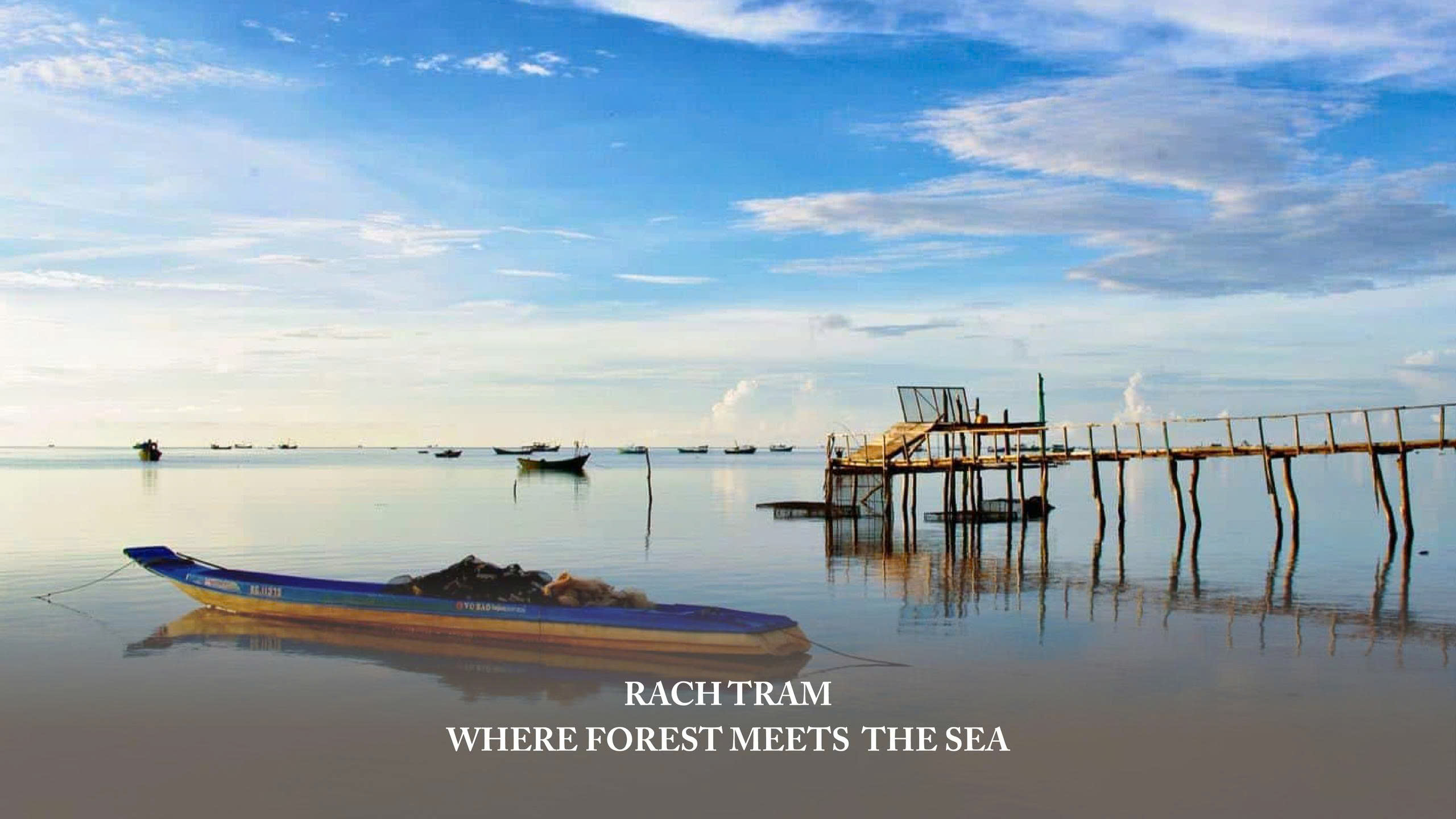
If Phu Quoc is the emerald of Vietnam’s southwestern sea, then Rach Tram is the last untouched melody — a place where nature still breathes at its own rhythm: slow, serene, and utterly pure.
Nestled in the island’s northernmost tip, the Rach Tram River meanders gently through forests of melaleuca and mangroves before flowing out to Bai Thom Beach. Each morning, mist lingers among the treetops; vapour rising from the forest and the sea weaves into a delicate veil — the island’s quiet breath of dawn.
Today, Rach Tram is no longer a distant frontier. From Duong Dong town, travellers can reach it within forty minutes by car. The old red dirt road has given way to smooth asphalt, making access easy — yet somehow, arriving at Rach Tram still feels like crossing into another world. Here, the only sounds are the rhythmic dip of oars, the call of birds across the canopy, and the whisper of waves meeting the shore.
Where Forest Meets the Sea
Rach Tram is not just a river — it is a living ecosystem, layered and diverse. Stretching nearly 25 kilometres, it springs from Phu Quoc National Park, splitting into three tributaries that weave through mangrove forests before merging with the sea.
At the upper reaches lie melaleuca forests — slender trunks reflected in still water like rows of flickering candles. Downstream, mangrove roots form intricate sculptures, nurturing life beneath: fish, shrimp, and crabs returning each season to spawn.
Ecologists call Rach Tram “the place where the forest meets the sea” — a rare confluence of mangrove and coastal ecosystems. This union sustains biodiversity, regulates the island’s climate, and serves as a natural shield protecting Phu Quoc’s delicate balance. Migratory birds rest here, and the lush vegetation stands as proof of an ecosystem quietly thriving in harmony.
The Village That Keeps Its Rhythm
Beyond its natural beauty, Rach Tram is home to a fishing village that has preserved the gentle cadence of coastal life. Here, people live as they always have — in harmony with the tides, the forests, and one another. Their livelihood depends on the sea, but their hearts belong to it, too. There is a warmth, an authenticity, that can only be found where life flows at the pace of nature.
Ecotourism – A Journey of Emotion
In recent years, Rach Tram has begun to appear on Phu Quoc’s ecotourism map. Visitors can take a small boat trip through the winding waterways, drifting under green canopies while listening to birdsong and watching fish dance in the water.
In the dry season, the river glows turquoise, reflecting sunlight into shimmering ribbons. In the rainy season, it turns a deep russet — draped in the earthy hues of silt and life. Near the estuary, travellers may camp, kayak, or trek through the forest. A few local families have opened modest homestays — simple, sincere, and welcoming. Dinner here is humble yet heartfelt: grilled fish, wild greens, and a bowl of chili fish sauce — enough to fill the night with warmth and conversation beneath the glow of an oil lamp.
But what Rach Tram offers most is not scenery — it is the rare gift of stillness. The moment you set your phone aside and listen only to the murmur of wind and water, you realise that nature needs no embellishment to move the soul.
That is why every visitor must come with respect — for both nature and the people who call this place home. If you listen closely, Rach Tram will tell you its own story: a story of land and water, of forest and sea — all breathing together, in one timeless harmony.
Tin tức liên quan
16/06/2026
Tin tức
KHI THIÊN NHIÊN NGUYÊN BẢN TRỞ THÀNH NỀN TẢNG CỦA NGHỈ DƯỠNG BỀN VỮNG TẠI BẮC ĐẢO PHÚ QUỐC
Giữa vịnh biển Bãi Thơm và hệ sinh thái rừng Rạch Tràm, Meliá Forest Bay Phú Quốc mở ra một cách tiế...
25/05/2026
Tin tức
BẮC ĐẢO PHÚ QUỐC VÀ CHU KỲ MỚI CỦA NHỮNG TÀI SẢN NGHỈ DƯỠNG CÓ CHIỀU SÂU
Sau giai đoạn điều chỉnh kéo dài, bất động sản nghỉ dưỡng đang bước vào một chu kỳ lựa chọn khắt khe...
12/05/2026
Tin tức
PHÚ QUỐC ĐƯỢC BÁO ANH GỌI LÀ “ẨN SỐ” MỚI CỦA ĐÔNG NAM Á
Không ồn ào như Phuket hay Bali, Phú Quốc đang được truyền thông quốc tế chú ý nhờ vẻ đẹp nguyên bản...
12/05/2026
Tin tức
BÁO THÁI LAN: PHÚ QUỐC KHÔNG CÒN LÀ ĐẢO NHỎ YÊN TĨNH
Từng là đảo đánh cá yên bình ở phía Nam Việt Nam, Phú Quốc đang trở thành bãi biển nổi bật của khu v...
24/04/2026
Tin tức
APEC 2027: BẢN ĐỒ ĐẦU TƯ MỚI CHO BẤT ĐỘNG SẢN PHÚ QUỐC
Việc Phú Quốc được lựa chọn đăng cai APEC 2027 không chỉ mang ý nghĩa đối ngoại mà còn mở ra một chu...
23/04/2026
Tin tức
PHÚ QUỐC 3 NĂM LIÊN TIẾP LỌT TOP 3 ĐẢO ĐẸP NHẤT CỦA TẠP CHÍ DU LỊCH "THƯỢNG LƯU"
(TITC) - Ngày 06/3/2026, Tạp chí du lịch danh tiếng DestinAsian chính thức công bố danh sách 10 hòn...

