
VIETNAM AND APEC: FROM A CHILDHOOD DREAM OF TRADITIONAL ÁO THE TO THE SHADES OF GREEN IN PHU QUOC
23/11/2026
As a child, whenever I watched television coverage of APEC Leaders’ Meetings, I would quietly wonder: Would the day ever come when world leaders gathered in Vietnam for a major international summit, dressed in our traditional attire for a commemorative photograph?
In 2006, that childhood dream became reality. APEC Hanoi was a resounding success.
In the photograph that still fills me with pride to this day, Russian President Vladimir Putin, Chinese President Hu Jintao and US President George W. Bush stood together in light blue áo the, while Vietnamese President Nguyễn Minh Triết stood out in a golden one.
Twenty years on, that sense of pride remains undiminished. Yet our perspective has evolved considerably. Vietnam today approaches the preparation and hosting of major international events with greater composure, poise and confidence, underpinned by a high-growth, sustainable economy and a readiness to engage with partners around the world on equal footing.
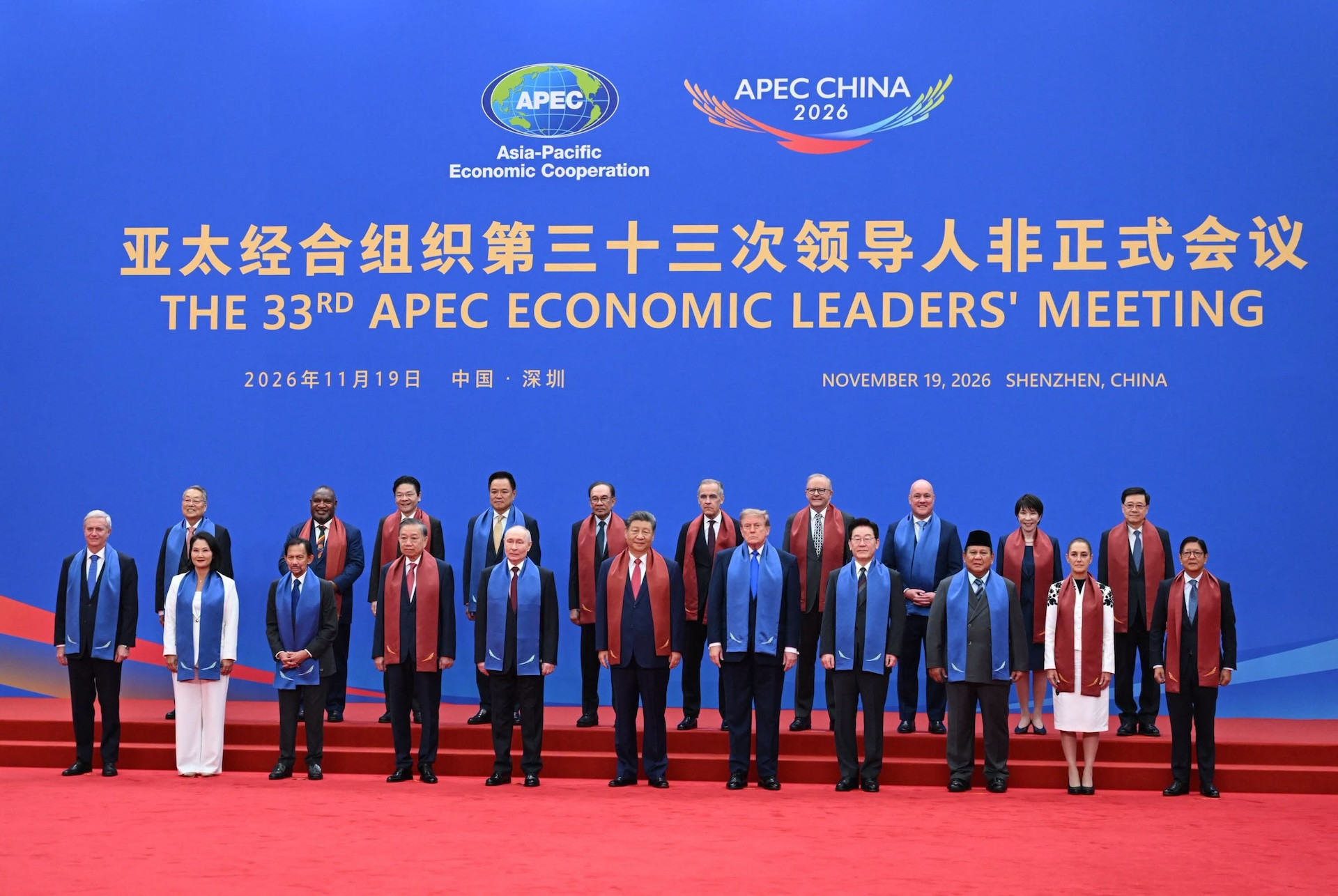
Leaders of the 21 APEC member economies pose for a group photograph ahead of the 33rd APEC Economic Leaders’ Meeting, recently held in Shenzhen, China. Photo: APEC
This November, as General Secretary and State President To Lam attends the 2026 APEC Economic Leaders’ Week in Shenzhen, those memories have come vividly back to mind. From Hanoi in 2006 to Da Nang in 2017 and Phu Quoc in 2027, Vietnam’s three turns as APEC host are more than milestones in its capacity to organize major international events. They reflect the country's journey from opening up and learning to taking a more proactive role in shaping and advancing regional cooperation.
From integration to helping shape the regional agenda
Vietnam joined the Asia-Pacific Economic Cooperation (APEC) forum in 1998, at a time when the Doi Moi reforms were opening up new opportunities, while the country was still strengthening its institutional framework and expanding its market reach.
Joining a forum that brings together 21 economies, each with distinct economic scales, levels of development and policy priorities, offered Vietnam an opportunity to build partnerships, draw on international experience and learn the value of cooperation founded on dialogue and consensus.
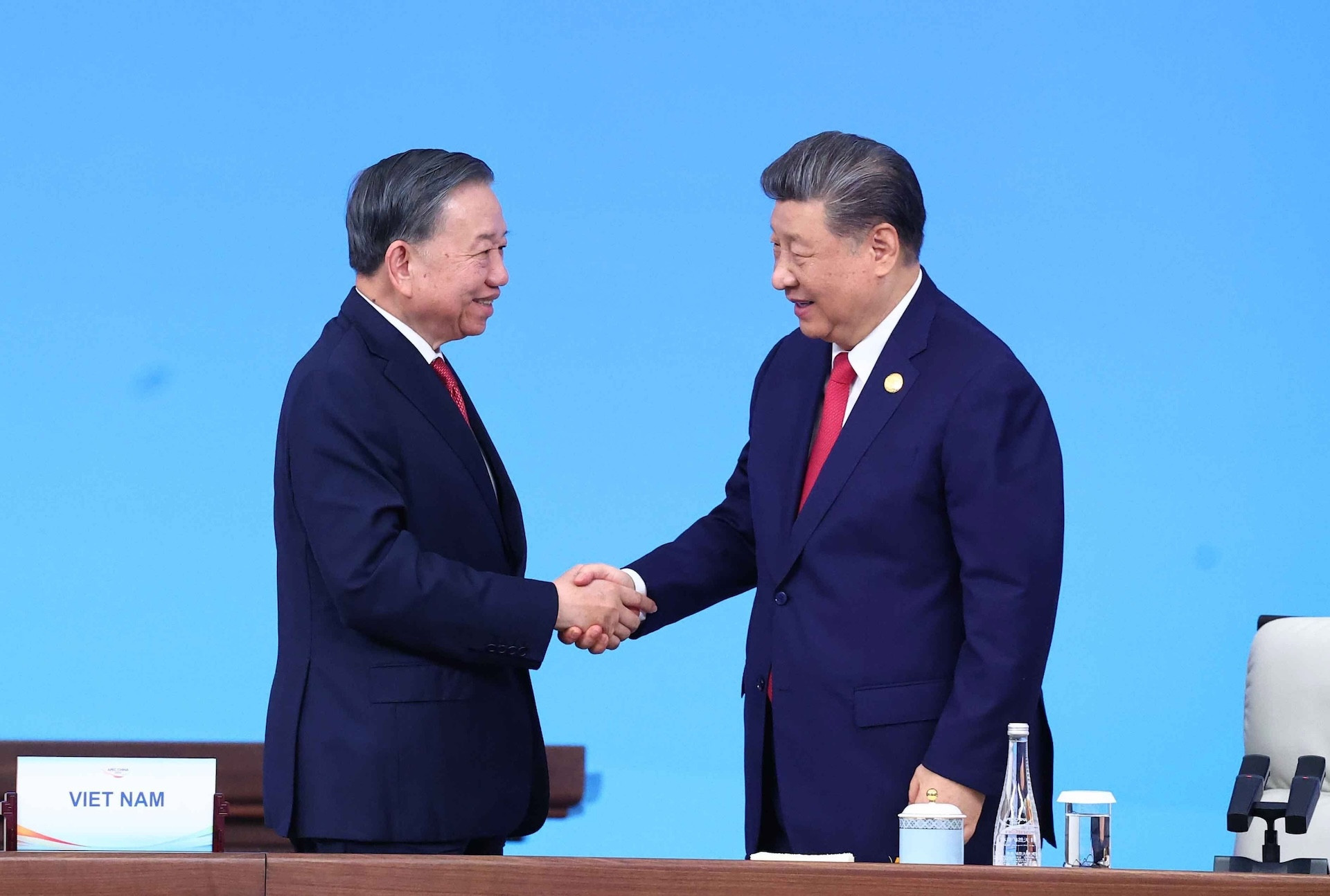
General Secretary and State President To Lam receives the role of host economy for the 34th APEC Economic Leaders’ Meeting. Photo: TTXVN
Eight years later, Hanoi became the meeting ground for APEC leaders. Behind the iconic group photograph lay an immense undertaking involving diplomacy, security, transportation, communications and protocol. Yet the success of the event went far beyond the host's meticulous preparations. The meeting adopted the Hanoi Declaration and the Hanoi Plan of Action to implement the Busan Roadmap towards the Bogor Goals of trade and investment liberalization, while also advancing efforts to reduce trade transaction costs. A Vietnam still building its experience had already begun contributing tangible outcomes to regional cooperation.
During this same period, Vietnam completed its accession process to the World Trade Organization (WTO), officially becoming a member in January 2007.
When APEC returned to Vietnam in 2017, Da Nang welcomed the leaders against a markedly different backdrop.
Vietnam had by then established a broader network of economic relationships and accumulated considerably greater experience in economic governance. The Da Nang Declaration called for renewed momentum towards innovative, inclusive and sustainable growth, while recognizing the establishment of the APEC Vision Group to help chart the forum's direction beyond 2020.
Those discussions subsequently became part of the broader process that shaped the Putrajaya Vision 2040, which aspires to an open, dynamic, resilient and peaceful Asia-Pacific community.
Composed and confident amid a world in flux
APEC 2026 is taking place at a time when international trade is being reshaped by strategic competition, trade barriers and shifting supply chains. Artificial intelligence, clean energy, and evolving requirements for data and product standards are also transforming the way economies produce and exchange goods. Cooperation, therefore, is no longer simply about expanding markets. It is equally about maintaining connectivity, mitigating the risk of supply chain disruptions and creating opportunities for businesses with varying levels of capacity.
In his article, “One Ocean, One Future,” published in China Daily on the occasion of his participation in the 33rd APEC Economic Leaders’ Week and bilateral engagements in China, General Secretary and State President Tô Lâm underscored the shared responsibility to preserve the Pacific as a region of peace, cooperation and development.
He reflected on Vietnam's contributions, from the Hanoi Plan of Action in 2006 to the initiative to develop an APEC vision beyond 2020, advanced in Da Nang in 2017. He also reaffirmed that science, technology, innovation and digital transformation are key drivers in realizing Vietnam's national development aspirations towards 2045.
Logo APEC 2027
This message was further reinforced in his remarks on November 17 at the Vietnam–Greater Bay Area (China) Technology and Innovation Connectivity Forum. General Secretary and State President To Lam called for stronger cooperation in artificial intelligence, semiconductors, robotics, human resource development and the application of technology across manufacturing, logistics and healthcare.
Of particular significance was his emphasis on translating the outcomes of cooperation into tangible improvements in business productivity, innovation capacity and quality of life. High-level meetings can only create lasting value when their outcomes find practical expression in laboratories, factories, schools and business operations.
I believe this is precisely where Vietnam's evolving outlook becomes most apparent. Confidence does not mean an absence of challenges, nor does it mean standing apart from disagreements among major economies. Rather, it is reflected in the ability to engage in dialogue with a broad range of partners, uphold independence and self-reliance, and remain steadfast in the pursuit of shared interests. Within APEC, a forum built on voluntary cooperation and consensus, the ability to listen, put forward proposals and bridge differences carries particular significance.
Such steadfastness must also be reflected in long-term choices. The United States withdrew from the Paris Agreement on climate change, effective January 27 this year. Yet a policy shift by a major power does not mean that everyone must follow the same course. Vietnam continues to pursue its commitment to net-zero emissions by 2050 under its National Climate Change Strategy.
Steadfastness does not mean inflexibility. The means and pathways must remain adaptable, taking into account available resources, energy security, business competitiveness and people's livelihoods. What must remain constant is the destination; what must evolve is the approach.
Phu Quoc 2027 and the green horizon of the future
In 2027, Phu Quoc will host APEC Economic Leaders’ Week as Vietnam takes on the role of host economy for the third time.
An island nestled in the waters of Vietnam's southwestern region offers a striking setting. Yet the significance of the event will extend far beyond its beaches and the infrastructure being developed in preparation. Phu Quoc presents a much broader question: How can Vietnam leverage APEC to advance economic connectivity, technological cooperation and sustainable development in ways that deliver lasting value to both the island and the country as a whole?
The first priority is connectivity. Airports, seaports and efficient road networks can bring people and goods closer together, but physical infrastructure alone is not enough. Businesses also need streamlined administrative procedures, widely accepted electronic documentation, interoperable data systems and more time-efficient logistics processes. Through APEC, Vietnam can promote the sharing of experience in digital customs, supply chain connectivity, multimodal transport and support for small businesses seeking to participate in cross-border trade. Success should be measured by tangible improvements on the ground, not by the number of conferences held or memoranda signed.
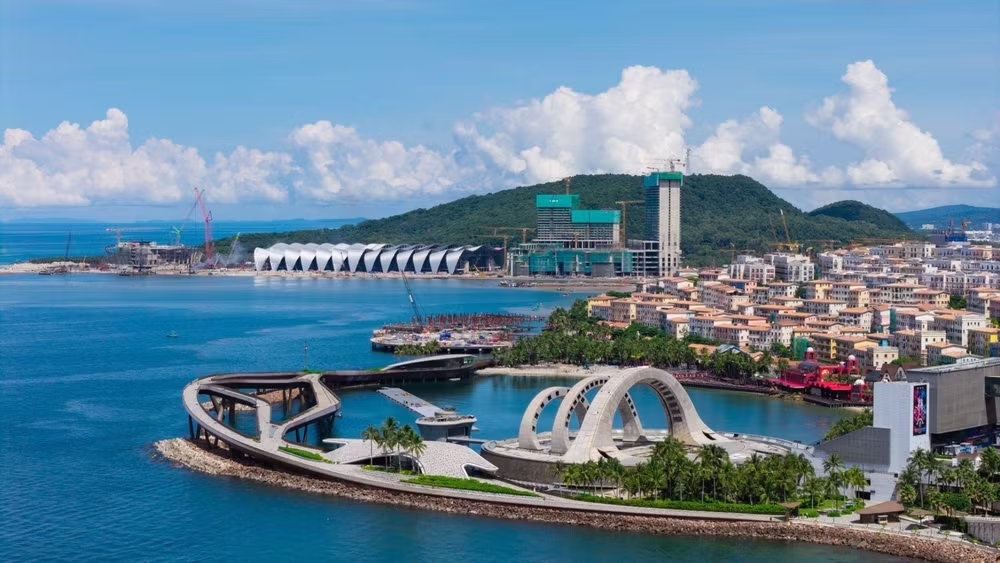
The APEC Convention and Exhibition Centre is gradually taking shape. Photo: Hoang Ha
The next priority is digital transformation. As artificial intelligence expands into manufacturing, transportation, healthcare and services, the challenge is no longer simply to gain access to new technologies, but to ensure that people have the skills to use and govern them effectively. Cooperation in engineering education, data governance, information security and support for small businesses adopting technology must be anchored in practical needs. When such efforts help businesses reduce costs, improve product quality or access new markets, the benefits of APEC become tangible in the most meaningful way.
The final priority is green transformation — a deeper dimension of what the blue waters of Phu Quoc represent.
Sustainable development must translate into more efficient energy use, cleaner transportation, marine ecosystem conservation, effective waste management and stronger climate resilience. For a coastal tourism destination, preserving its natural environment while enhancing service quality and sustaining local livelihoods is a very real and immediate challenge. Through APEC, Vietnam can promote dialogue and cooperation on green finance, environmental standards and low-emission technologies, with due consideration for the circumstances of each economy.
Of course, APEC 2027 cannot resolve every challenge. Initiatives need committed partners, adequate resources and clear mechanisms for measuring outcomes. Infrastructure developed to serve the summit must also respond to Phu Quoc's long-term needs. This commitment to substance is what will ultimately earn the credibility of an experienced host economy.
In 2006, I was deeply moved to see world leaders arrive in Vietnam, just as I had imagined in my childhood dream. Today, as I look towards APEC 2027, that emotion carries an additional meaning: the hope that Vietnam will continue to welcome its friends around the world with sincerity, resilience and confidence, while remaining steadfast in its pursuit of peace, cooperation, innovation and sustainable development.
From the traditional áo the of those days to the blue waters of Phu Quoc next year, one aspiration remains unchanged: to move forward with the world towards a better future for all.
Source: vietnamnet.vn
Tin tức liên quan
23/11/2026
Tin tức
VIỆT NAM VÀ APEC: TỪ GIẤC MƠ ÁO THE TRUYỀN THỐNG ĐẾN MÀU XANH CỦA PHÚ QUỐC
Ngày còn là một đứa trẻ, mỗi lần xem trên truyền hình tin tức về hội nghị thượng đỉnh quốc tế APEC,...

04/07/2026
Tin tức
PHÚ QUỐC TIẾP TỤC KHẲNG ĐỊNH SỨC HÚT CỦA ĐẢO NGỌC TRÊN BẢN ĐỒ DU LỊCH QUỐC TẾ
Nửa đầu năm 2026, Phú Quốc tiếp tục ghi nhận những tín hiệu tăng trưởng tích cực, cho thấy sức bật m...
16/06/2026
Tin tức
KHI THIÊN NHIÊN NGUYÊN BẢN TRỞ THÀNH NỀN TẢNG CỦA NGHỈ DƯỠNG BỀN VỮNG TẠI BẮC ĐẢO PHÚ QUỐC
Giữa vịnh biển Bãi Thơm và hệ sinh thái rừng Rạch Tràm, Meliá Forest Bay Phú Quốc mở ra một cách tiế...

25/05/2026
Tin tức
BẮC ĐẢO PHÚ QUỐC VÀ CHU KỲ MỚI CỦA NHỮNG TÀI SẢN NGHỈ DƯỠNG CÓ CHIỀU SÂU
Sau giai đoạn điều chỉnh kéo dài, bất động sản nghỉ dưỡng đang bước vào một chu kỳ lựa chọn khắt khe...
12/05/2026
Tin tức
PHÚ QUỐC ĐƯỢC BÁO ANH GỌI LÀ “ẨN SỐ” MỚI CỦA ĐÔNG NAM Á
Không ồn ào như Phuket hay Bali, Phú Quốc đang được truyền thông quốc tế chú ý nhờ vẻ đẹp nguyên bản...
12/05/2026
Tin tức
BÁO THÁI LAN: PHÚ QUỐC KHÔNG CÒN LÀ ĐẢO NHỎ YÊN TĨNH
Từng là đảo đánh cá yên bình ở phía Nam Việt Nam, Phú Quốc đang trở thành bãi biển nổi bật của khu v...

